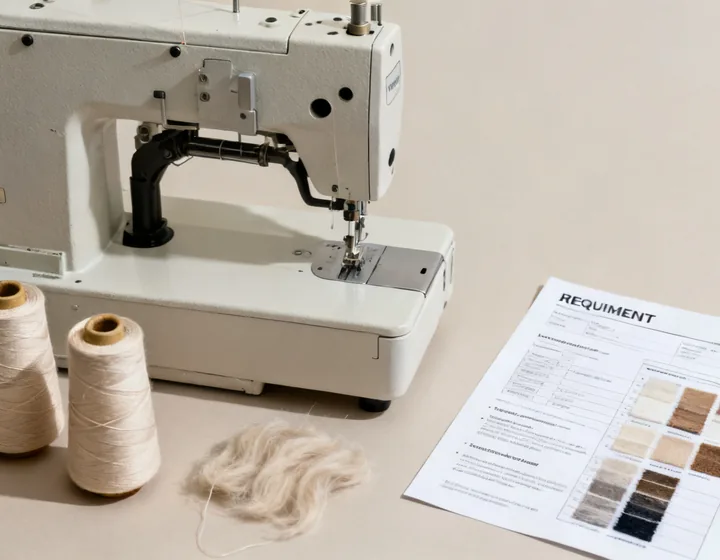
Application requirements
Project pages on this site support procurement, they do not introduce a separate measured keyword. Sewing rooms, converters and protective-textile programs each change which yarn fields matter first.
Describe end use and exposure conditions
State whether the yarn or fiber will sit next to skin, pass through industrial sewing, live outdoors, or enter a coated or laminated composite. Heat, abrasion, moisture, ultraviolet and chemical splash change lubrication, twist and fiber family. If a search began with a branded insulation or nylon phrase, still write the actual duty: batting, stitching, weaving or reinforcement. Site constraints such as receiving dock limits, indoor humidity and shade-lot mixing rules belong in the brief because they affect package form and lot size. Keep unknowns labeled instead of filling them with catalog adjectives.
Identify the test method and sample condition
Name the method family you actually need: tensile, twist, evenness, colorfastness, abrasion or dimensional change. ASTM or AATCC titles are question frames, not results. Record specimen size, conditioning and whether the sample is greige, dyed or finished. A mill report that cites a method without edition, laboratory and article code cannot close the question. Protective programs may add flame, cut or puncture methods; those still need buyer-named acceptance numbers. We can request the documents; we cannot certify the product.
Match quantity, finish and usable width to the application
Yarn purchases usually speak in kilograms, pounds or cones, while fabric converting later cares about usable width and GSM. Write both if the project will knit, weave or laminate after the yarn arrives. Finish steps such as dyeing, waxing, twisting or assembling ply should be listed as included or excluded. Delivery stages—sample, pre-production, bulk—need separate quantities so mills do not hide sampling in the bulk price. US destination and requested window complete the logistics half of the comparison. Optional budget should name currency and whether it is per unit or whole order.
Stock program versus custom development
A stock cone can shorten sampling when fiber composition, yarn count, linear density and package form already fit the retained reference. Custom ply, twist, lubrication or shade work can match the construction, but it needs written minimums, lab-dip identity and a separate sample-to-bulk decision. Neither path is universally better; the buyer chooses speed against exact construction.
Unit price versus comparable delivered scope
A lower unit price is useful only when usable width, GSM, yield, dyeing, testing, freight and duties sit on the same sheet. If mill A quotes greige yarn FOB mill and mill B quotes dyed, waxed cones DDP to a US destination, the headline numbers are not comparable until exclusions are restated.
Family brochure versus exact-product evidence
A fiber-family brochure can help discovery. Award still needs the quoted article code plus a current mill sheet. Colorfastness, tensile strength, abrasion resistance or pilling claims should name method edition, specimen and lot. ISO 9001 or OEKO-TEX STANDARD 100 marks remain mill documents with printed scope and expiry; they are not transferred to this sourcing desk.